
Practical cooking guide
Plan three family dinners around one shopping list
A worked meal-planning example using lentils, paneer and rice, with a clear distinction between shared ingredients and cooked leftovers.
Published by Kitchen Handi · AI-assisted editorial guide · Published 26 October 2026. How we prepare our content
Plan a short stretch you can actually follow
Start with three dinners rather than committing every meal of a full week. Mark which evening is rushed, which allows a longer simmer and which needs a flexible option. Decide the number of people eating each evening. Recipe servings are a guide: adults, children, appetites and accompanying dishes change how much you need.
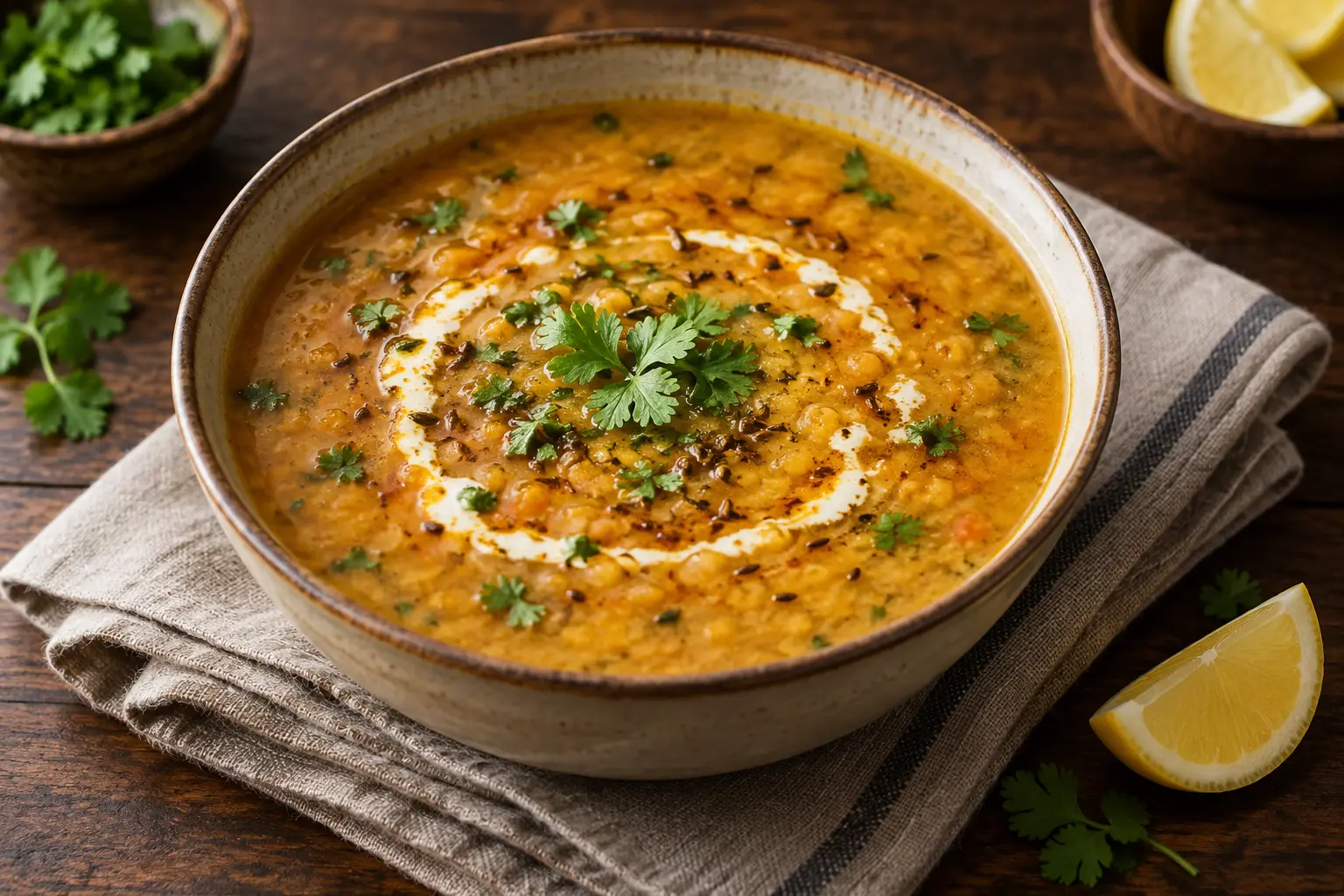
This example uses dal shorba, paneer bhurji and mujadara. It is a cooking plan rather than a prescribed diet. Dal shorba is a light soup, so choose bread or another accompaniment if it will be the main meal. Mujadara needs time for onions to caramelise; reserve it for the evening with more breathing room.
A three-evening example
Evening one: make dal shorba and serve it with bread. Check the recipe for the lentil type and whether a blender is needed for your preferred finish. Evening two: cook paneer bhurji, using onion and tomato from the same shopping trip. Choose ready bread or allow separate time for fresh chapatis. Evening three: make mujadara, preparing its onions first and following the rice-and-lentil cooking sequence.
These dishes share ingredients, not identical cooked bases. Tomato soup cannot simply be poured into every later recipe. Keep the measured rice, pulses and seasonings appropriate to each dish. Likewise, one onion used on Monday is no longer available for Wednesday: shared ingredients still need quantities added together.
Build the list in two passes
First, open each recipe and set the servings. Add the ingredient quantities to one list, keeping different forms separate: dry lentils and cooked lentils are not interchangeable quantities. Group fresh produce, dairy, dry goods and spices. Check the fridge and cupboard, then cross out only what is present in a usable amount.
Second, add the accompaniments and practical extras. Bread, yoghurt, a lemon garnish and a salad all count as shopping if they are part of your plan. Pack sizes may leave extras, so choose where they will go. Buy a larger pack only when there is a realistic use for the remainder; a low unit price is poor value if half is discarded.
Use Kitchen Handi to keep the plan visible
Add chosen recipes to Meal Planner and use Shopping List to collect ingredients. Review the combined quantities yourself, especially for ingredients written under different names. Change a planned dish when your schedule changes; the calendar is a working aid, not a commitment to cook regardless of circumstances.
Preparing components ahead can reduce evening effort, but shared shopping and safe leftovers are separate decisions. Follow food-storage guidance for the ingredient concerned, cool cooked food promptly and use clean containers. Our linked leftover guide explains the checks, including the shorter refrigerated storage guidance for cooked rice.
Recipes to put this into practice
- Dal Shorba — A light, gently spiced red-lentil soup with lemon and cumin, suitable for a simple starter or meal.
- Quick Paneer Bhurji — Soft crumbled paneer cooked quickly with onion, tomato, green chilli and warming spices without becoming dry.
- Mujadara — Earthy lentils and rice crowned with deeply caramelized onions, seasoned simply with cumin and finished with crisp onion strands.
Try the ingredient finder · Leftovers and lunchbox guidance · Send a correction